

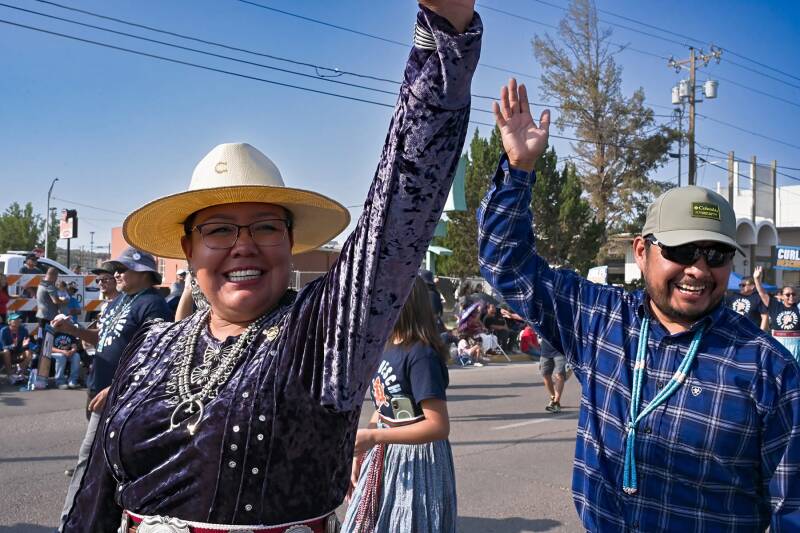
WINDOW ROCK, Ariz. — As the 2026 Navajo Nation presidential election enters its final weeks, a historic question continues to emerge across Diné Bikéyah:
Can the Navajo Nation elect its first female president?
If elected, Crystalyne Curley would become the first woman in Navajo Nation history to serve as president.
The prospect has generated conversation throughout the Navajo Nation, with supporters pointing to Curley's experience in government, while others continue to question whether a woman should hold the Nation's highest elected office.
The debate is not always political. In many communities, it has become a discussion about tradition, leadership, and the role of women in Navajo government.
A Historic Candidacy
Curley has already broken barriers during her political career.
She became the first woman elected Speaker of the Navajo Nation Council, one of the most powerful positions within the legislative branch. Her current campaign now presents another historic opportunity.
If successful, she would become the first woman elected president since the office was established under the modern Navajo Nation government structure.
Not the First Woman to Run
Curley is only the second woman in Navajo Nation history to reach the presidential ballot.
The first was Linda Lovejoy, who made history during her presidential campaign years ago.
Interestingly, Lovejoy has not endorsed Curley in the current race and has instead publicly supported Justin Jones, demonstrating that support among female leaders is not necessarily based on gender alone.
A Changing Political Landscape
Throughout the campaign, some voters have openly expressed support for electing a woman president, saying leadership should be based on qualifications, experience, and vision.
Others, including both men and women, have argued that traditional beliefs should guide leadership roles within the Navajo Nation.
The differing viewpoints have highlighted a broader conversation taking place across Navajo communities about modern governance and cultural traditions.
Supporters of Curley often note that Navajo women have long held important roles within families, communities, business, education, and tribal government.
Critics, meanwhile, argue that the presidency carries unique cultural and political responsibilities that they believe should remain in male leadership.
What Voters Will Decide
Ultimately, the answer to the question will not come from polls, debates, or campaign advertisements.
It will come from Navajo voters.
On Election Day, citizens will decide whether the Nation is ready to elect its first female president or whether voters will instead select the Jones-Ellison ticket to lead the government.
Regardless of the outcome, the 2026 election has already secured a place in Navajo political history.
For the second time ever, a woman's name appears on the presidential ballot.
And for the first time ever, that woman has a realistic opportunity to become President of the Navajo Nation.
The question now is simple: Will Navajo voters make history?
Create Your Own Website With Webador